
A lot of buyers get stuck choosing between residential and commercial pressure washing machines because specs look similar on the surface. PSI numbers overlap. GPM looks close enough. Prices jump fast. And marketing muddies the water.
But the wrong choice costs you more than money. It costs time on every job, burns through pumps, limits what work you can take, and quietly kills profit.
This guide breaks down the real differences between residential vs commercial pressure washer setups, how power actually translates to cleaning speed, and when stepping up to commercial pressure washing machines is the smart move. If you’re running jobs, quoting work, or planning to scale, this will save you frustration later.
Equipment Types and Real-World Use Cases
Pressure washers fall into two broad buckets, but the gap between them is bigger than most people expect.
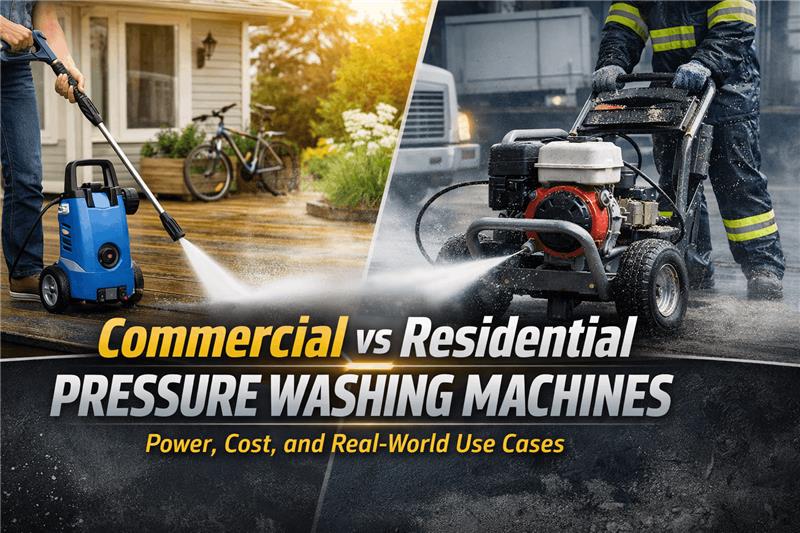
Residential pressure washers are designed for short runtimes and light materials. Think patios, cars, fences, and occasional driveway cleaning. They’re usually electric or small gas units, lower flow, lighter frames, and consumer-grade pumps.
Commercial pressure washing machines are built for daily use. Longer duty cycles. Heavier frames. Serviceable pumps. Higher flow rates. These machines exist to clean faster, handle tougher surfaces, and survive years of abuse.
Here’s what that looks like in real jobs:
- Residential units struggle with grease, gum removal, concrete restoration, fleet washing, and large surface cleaning.
- Commercial and industrial pressure washing equipment handles storefronts, parking lots, warehouses, loading docks, heavy equipment, and multi-property contracts without overheating or stalling.
If your work involves time pressure, repeat clients, or billing by the job, residential machines become a bottleneck fast.
Key Features That Actually Matter
Specs matter, but only if you understand what they do on the job.
PSI vs GPM
PSI gets attention, but GPM is what moves dirt. Higher flow means faster rinsing, better chemical draw, and shorter job times. Most heavy duty pressure washer setups prioritize balanced pressure with higher GPM.
Pump type
Commercial pressure washer PSI GPM ratings are useless if the pump can’t survive. Triplex plunger pumps are standard for professional machines because they’re rebuildable and designed for continuous use. Axial pumps are cheaper and disposable.
Engine or motor
Gas engines dominate commercial work because they offer portability and higher output. Electric commercial units exist, but they’re usually tied to indoor or regulated environments with proper power supply.
Build quality
Frames, fittings, hoses, and unloaders separate industrial pressure washer price points. Steel frames, thermal protection, vibration isolation, and easy service access aren’t luxury features. They’re survival features.
Common Buying Mistakes and How to Avoid Them
The most expensive mistake is underbuying.
People chase PSI because it’s easy to compare, then end up with low flow machines that clean painfully slow. Others buy residential units labeled “professional” without checking pump type or duty rating.
Another mistake is ignoring total cost of ownership. A cheaper machine that needs replacement every season is more expensive than a solid commercial pressure washer for sale that runs for years with basic maintenance.
Avoid both by matching specs to workload, not budget comfort.
Electric vs Gas and Light vs Heavy Duty
Electric machines make sense indoors, noise-restricted zones, or places with emissions rules. They’re clean and predictable but limited by power supply.
Gas machines dominate outdoor and mobile work. They deliver higher flow, more flexibility, and broader attachment compatibility.
Light duty commercial units sit at the entry point. They’re fine for smaller businesses, spot cleaning, or part-time work.
Heavy duty pressure washer setups are for volume. Surface cleaners, downstream injectors, hot water systems, and long hose runs all demand higher flow and stronger components.
If your jobs involve concrete, oil, or large square footage, light duty becomes false economy.
Maintenance, Lifespan, and Total Cost of Ownership
Commercial machines demand maintenance, but they reward it.
Regular oil changes, filter checks, and proper winterization keep triplex pumps running for thousands of hours. Parts are replaceable. Downtime is predictable.
Residential units are cheaper upfront but disposable. When pumps fail, replacement costs often exceed the machine’s value.
That’s why industrial pressure washer price makes sense over time. You’re buying uptime, not just pressure.
When Research Should Turn Into Purchasing
If you’re quoting jobs and turning work down because your machine can’t handle it, research is already costing you money.
If jobs take longer than competitors, or you’re renting equipment for certain tasks, it’s time to stop comparing specs and start investing.
Commercial pressure washing machines aren’t about status. They’re about control over job scope, speed, and margins.
How to Choose the Right Commercial Pressure Washer for Your Job
Start with the work, not the machine.
Ask yourself what surfaces you clean most, how many hours per week the machine runs, and whether you plan to add surface cleaners, burners, or long hose reels.
Then match specs accordingly:
- Higher GPM for large flatwork and speed
- Moderate PSI with heat for grease and oil
- Gas power for mobile work
- Electric for indoor or regulated sites
Professional pressure washer specs only matter when they align with real-world jobs.
Conclusion
Choosing between residential and commercial pressure washing machines isn’t about budget. It’s about workload, longevity, and control over your business.
Commercial machines clean faster, last longer, and open the door to higher-value jobs. Residential units close that door without warning.
If you know your jobs, understand PSI vs GPM, and plan for growth, the right machine becomes obvious.
Explore commercial options, compare configurations, and choose equipment that works as hard as you do.
